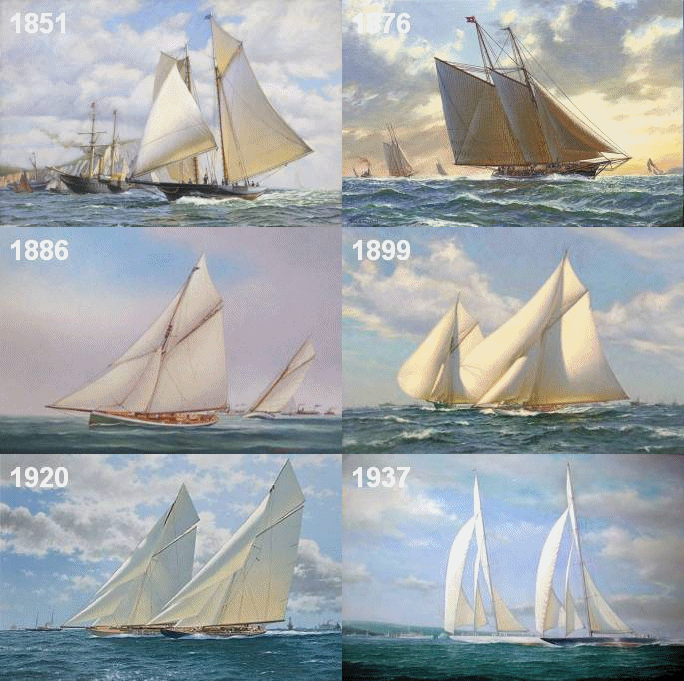
 AMERICA'S CUP
1851-1937
"If we can fly today in the San Francisco Bay, this is because there have been "adventurers" like Walter Greene and Mike Birch.
To understand the future, we must know and respect the past."
Loïck PEYRON (Voiles et Voiliers July 2014)







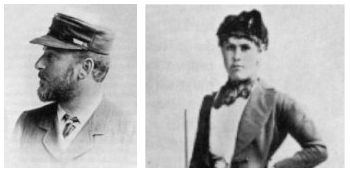 A strange couple defied the N.Y.Y.C.
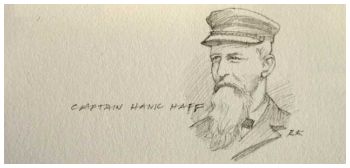 Nobody in America's Cup history has sailed in the afterguard of more successful Cup boats than Hank Haff, skipper or tactician of four winners between 1881 and 1895. As of 2004, only Nathanael G. Herreshoff, C. Oliver Iselin, and Dennis Conner have matched his remarkable record.
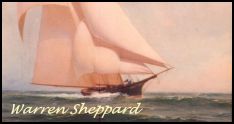 Sheppard was a true Renaissance Man: successful as an artist, teacher, author, yachtsman, navigator and yacht designer. He studied painting under the excellent M.F.H. de Haas in New York City, and received his formal art training at the Cooper Union.
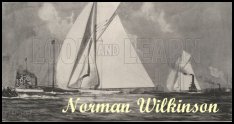 Artist in oil, watercolour and drypoint, usually of marine subjects. Illustrator and poster artist, he also made an important contribution in both World Wars in the field of dazzle camouflage.