 AMERICA'S CUP
1851-1937
«Si on arrive à voler aujourd'hui dans la baie de San Francisco, c'est parce qu'il y a eu des "aventuriers" comme Walter Greene ou Mike Birch.
Pour bien voir l'avenir, il faut connaître et respecter le passé.»
Loïck PEYRON (Voiles et Voiliers Juillet 2014)



 15 juin 1903 :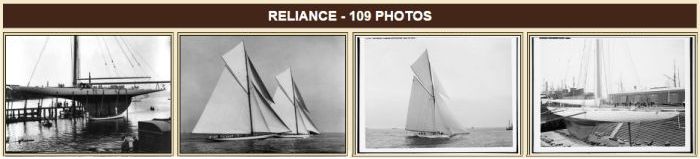
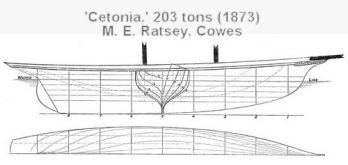 Michael Edward Ratsey vient d'une famille de constructeur de navires. Son grand-père Lynn Ratsey a construit le cotre Leopard en 1807. Ses dimensions étaient: longueur sur le pont, 64 pieds 4 pouces; longueur de la quille, 54 pieds 3 pouces; maitre bau, 19 pieds; profondeur, 11 pieds; tirant d'eau, 10 pieds.
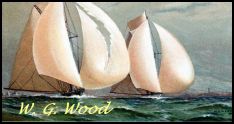 Wood was born in Brooklyn, and attended school at Trinity School and Columbia University. At the outbreak of the Spanish-American War, he joined the US Naval Reserve and served aboard the Yankee clipper. Later, he also served under General John J. Pershing in his pursuit of Pancho Villa.
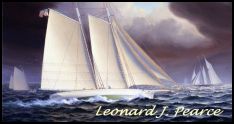 Although little is known about this artist who adeptly worked in both watercolors and oils, records show that he sailed to the far east in the 1860's. (Traditionally, the majority of sea painters lacked any gallery representation, preferring instead to work directly from commissions by the vessel owners themselves).